
 Listicle
How to Plan Thanksgiving Travel Without the Chaos
Last Updated: November 19, 2026
Quick Summary
The best Thanksgiving travel plan begins with timing, a little flexibility, and the understanding that approximately 81.5 million Americans have also decided this is a wonderful week to visit family.
For 2026, the heaviest road traffic is expected Tuesday and Wednesday afternoons, with another wave of congestion as everyone heads home Sunday and Monday. Thanksgiving Day itself is forecast to be considerably calmer on the roads. Book with your actual travelers in mind, allow breathing room in your schedule, and have a backup plan for the occasional holiday travel plot twist.
- Tuesday and Wednesday afternoons: Expect heavy outbound road traffic. Leave earlier in the day when possible.
- Thanksgiving morning: Often an excellent driving option, with minimal congestion forecast for 2026.
- The return trip: Sunday and Monday afternoons are expected to be busy. Plan accordingly.
- Flying: Favor nonstop flights or comfortable connection times, and keep your airline's app notifications turned on.
- When things go sideways: Know your rebooking options and airline refund rights before accepting a travel credit.
A little preparation goes a long way toward making sure the most dramatic part of Thanksgiving is the family dinner conversation—not getting there.
Table of Contents
- Why Thanksgiving Travel Feels Harder Than It Should
- When Is Thanksgiving Traffic the Worst?
- Booking and Timing Your Thanksgiving Trip
- Thanksgiving Travel Packing List for Carry-On Travelers
- Thanksgiving Driving Tips for Road Trips
- What to Do When Your Thanksgiving Flight Is Delayed
- Building Your Thanksgiving Trip Around the People Traveling
- Frequently Asked Questions
Why Thanksgiving Travel Feels Harder Than It Should
Thanksgiving travel is a cherished American tradition in which millions of people simultaneously decide to visit family, transport a casserole, and test the limits of the interstate highway system.
It's heartwarming. It's chaotic. And somewhere between the airport security line, questionable gas-station coffee, and the third person asking, "Are we there yet?", the holiday spirit can become a little difficult to locate.
According to AAA's 2026 Thanksgiving travel forecast, approximately 81.5 million Americans are expected to travel at least 50 miles from home during the holiday period. That's a lot of people trying to get somewhere before the turkey gets cold.
And the challenge isn't just the crowds. It's that Thanksgiving squeezes an extraordinary number of travel decisions into a very small window. Flights fill up, highways slow down, hotel availability tightens, and suddenly that perfectly reasonable six-hour drive has become an eight-hour family bonding exercise nobody requested.
At The Curated Mile, we believe the best journeys begin with the people taking them. Holiday travel is no exception.
A family with three teenagers has different priorities than a couple flying in for a long weekend. Grandparents may appreciate fewer connections and a little breathing room. Parents of young children might consider arriving before bedtime a greater accomplishment than finding the cheapest airfare.
The secret isn't planning every minute or eliminating every possible inconvenience. It's making the important decisions in the right order, allowing room for the unexpected, and remembering why you're making the trip in the first place. After all, the goal is to arrive with enough holiday spirit left to enjoy the people you came to see. Preferably before someone starts carving the turkey.
When Is Thanksgiving Traffic the Worst?
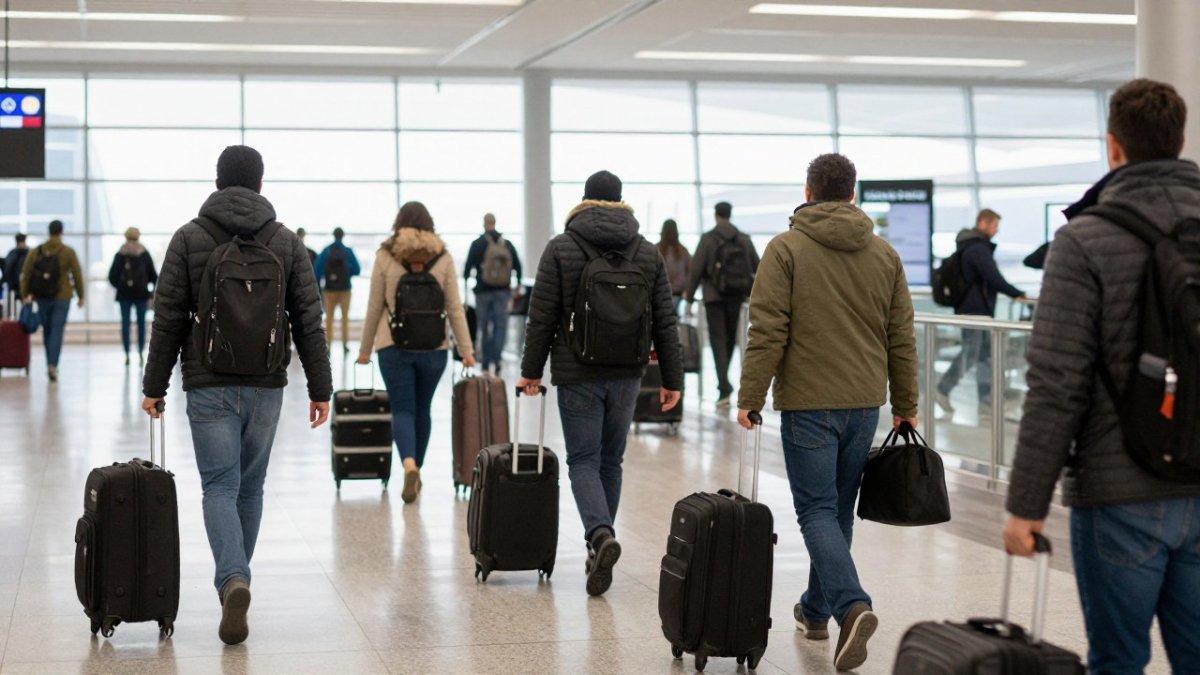
There is a special kind of optimism involved in Thanksgiving travel. Every year, millions of Americans look at the calendar and think, "If we leave at just the right time, we'll beat everyone else."
Unfortunately, everyone else has a calendar, too.
For Thanksgiving 2026, AAA and transportation analytics company INRIX expect the heaviest outbound road congestion on Tuesday, November 24, and Wednesday, November 25, particularly during the afternoon and early evening.
The return trip brings another wave of traffic on Sunday, November 29, and Monday, November 30, when families collectively decide they've had a lovely visit and would very much like to sleep in their own beds.
The good news? You have options.
The Best and Worst Times to Drive Thanksgiving Week 2026
According to AAA's 2026 Thanksgiving travel forecast, these are the projected driving windows:
Travel Day | Worst Time to Drive | Better Time to Leave |
|---|---|---|
Tuesday, November 24 | 2–8 p.m. | Before 1 p.m. |
Wednesday, November 25 | Noon–7 p.m. | Before noon |
Thursday, November 26 | Minimal traffic expected | Check local conditions |
Friday, November 27 | 1–7 p.m. | Before noon |
Saturday, November 28 | Noon–9 p.m. | Before 11 a.m. |
Sunday, November 29 | Noon–8 p.m. | Before 11 a.m. |
Monday, November 30 | 2–7 p.m. | Before 1 p.m. |
Source: AAA and INRIX Thanksgiving 2026 Travel Forecast. All times are local to the route's time zone. Actual conditions will vary by location, weather, and roadway.
A few things worth knowing before you pack the car:
Tuesday and Wednesday are prime departure days. If your schedule allows, leaving earlier in the day can help you avoid the worst congestion. That extra morning coffee at home might cost you more time than it's worth.
Thanksgiving morning is surprisingly promising. INRIX forecasts minimal road congestion on Thursday itself. If you live close enough to arrive before dinner, a Thanksgiving-morning drive may be your best option. Just make sure the person cooking knows your actual arrival time.
Black Friday isn't a free pass. Friday afternoon still has a projected congestion window, and retail areas bring their own special brand of traffic. Nothing says holiday cheer quite like getting caught between a shopping mall and an interstate entrance.
Saturday deserves a closer look. It's tempting to assume everyone is either shopping or recovering from Thursday's meal. Unfortunately, INRIX predicts significant Saturday afternoon and evening congestion on some routes.
Sunday and Monday are major return days. Sunday afternoon is expected to be especially busy, and Monday isn't necessarily the quiet escape travelers might expect. If you have flexibility, compare actual route conditions before choosing your return.
What About Flying During Thanksgiving Week?
Air travel follows a different rhythm. The Sunday after Thanksgiving has historically been one of the busiest days for airport security screenings, while Thanksgiving Day itself often sees lighter passenger demand. That doesn't mean every Wednesday flight will be packed or every Thanksgiving-morning flight will be peaceful.
The busiest dates can shift from year, and individual airports have their own traffic patterns.
If you're flying, consider three things:
- Earlier departures: Morning flights may have less exposure to delays that accumulate throughout the operating day, although weather and aircraft positioning can still disrupt the schedule.
- Nonstop flights: One flight means one fewer opportunity for a connection to become your holiday's unexpected subplot.
- Realistic connection times: Give yourself room to change terminals, accommodate delays, and locate the family member who wandered off in search of a cinnamon roll.
Before departure, check your airline's notifications, the FAA's airport status information, and TSA's passenger-volume data for current conditions.
Watch out: A less popular travel day isn't automatically a less expensive one. Compare actual fares and schedules before assuming you've discovered a secret loophole in holiday travel pricing.
The goal isn't to outsmart 81.5 million travelers. It's to make choices that give you a little more control over your own journey.
Booking and Timing Your Thanksgiving Trip
Thanksgiving is not generally the ideal time to experiment with the philosophy of "Let's just see what happens."
Flights fill up. Hotel availability tightens. And the charming rental property you bookmarked three months ago may now cost considerably more—or be occupied by someone who actually booked it.
The earlier you begin comparing your options, the more choices you're likely to have. But booking early doesn't mean booking blindly.
Start with the people traveling, the dates they can realistically manage, and the total cost of getting everyone where they need to be.
A few practical strategies can make a meaningful difference:
- Compare several date combinations. Leaving a day earlier or returning a day later might improve availability or pricing, but check the full cost before deciding.
- Look beyond the advertised airfare. Baggage fees, seat selection, airport parking, ground transportation, and an additional hotel night can quickly erase an apparent bargain.
- Prioritize manageable connections. The cheapest itinerary isn't necessarily the best value if it includes two connections and an overnight airport adventure nobody requested.
- Review cancellation and change policies. Know what happens if your plans change before purchasing tickets or reserving nonrefundable accommodations.
- Coordinate the group before booking. Confirm budgets, arrival dates, accessibility needs, and sleeping arrangements while everyone is still feeling cooperative.
And if several households are traveling together, resist the temptation to manage everything through a group text containing 47 messages, three conflicting flight screenshots, and one person who only responds with a thumbs-up.
A shared itinerary can work wonders.
For families coordinating holiday trips with children, our Family Travel planning services can help bring the moving pieces together. If you're deciding whether professional planning support makes sense for your trip, our guide on how to choose a travel advisor explains what to consider.
The point isn't to create the most elaborate plan. It's to make the important decisions before they become expensive surprises.
Thanksgiving Travel Packing List for Carry-On Travelers
Thanksgiving packing presents a unique challenge: you're preparing for travel, unpredictable weather, family photographs, and the possibility that someone will ask you to bring a side dish. Suddenly, packing light feels like an Olympic event.
For shorter trips, traveling with only a carry-on can make crowded airports significantly easier to navigate. You'll avoid the baggage carousel, have your essentials close at hand, and spend less time worrying about whether your suitcase decided to celebrate Thanksgiving in another city.
Here's a practical Thanksgiving travel packing list:
- Versatile clothing: Choose layers and outfits that can be mixed and matched rather than packing for every possible social scenario.
- Medications and essentials: Keep prescriptions, glasses, important medical supplies, and anything difficult to replace in your carry-on.
- Chargers and electronics: Bring charging cables, a portable power bank, and headphones for the moments when a little personal space becomes essential.
- Snacks and water: Pack a few nonperishable snacks and an empty refillable water bottle to fill after security.
- Travel documents: Save flight details, hotel confirmations, addresses, and important contact information somewhere accessible offline.
- A change of clothes: Especially useful if you're traveling with children or checking another bag.
- A compact first-aid kit: Include basic supplies and any personal items your family regularly needs.
A Word About Traveling With Thanksgiving Food
If you're flying with holiday dishes, check TSA's current food and liquid restrictions before arriving at the airport.
Solid foods are generally easier to transport through security. Foods that pour, spread, or behave like liquids may be subject to carry-on liquid restrictions. Yes, this can include gravy.
There are few Thanksgiving disappointments quite as specific as explaining to a TSA officer why your grandmother's homemade gravy deserves special consideration.
For gifts, consider using gift bags rather than wrapping paper. Security officers may need to inspect packages, and beautifully wrapped presents don't receive diplomatic immunity.
Finally, confirm your airline's carry-on size and weight requirements before packing. Those rules vary by carrier.
A little planning now means fewer awkward negotiations at the boarding gate later.
Thanksgiving Driving Tips for Road Trips
The Thanksgiving road trip is practically an American institution.
There's the carefully planned departure time, the optimistic GPS estimate, the first snack request approximately eleven minutes into the drive, and the inevitable debate about whether everyone really needs another bathroom stop.
It's part of the experience.
But a successful holiday road trip requires a little more preparation than a full tank of gas and an excellent playlist.
Before You Leave
Give your vehicle a quick check before heading out:
- Check tire pressure, tread, and fluid levels.
- Make sure headlights, brake lights, and windshield wipers are working properly.
- Fill the tank or plan charging stops before entering heavily traveled corridors.
- Pack water, a flashlight, charging cables, and an emergency kit appropriate for your route and weather.
- Check weather forecasts, construction alerts, and road conditions along your entire route.
If you're crossing several states, remember that the weather at your destination may be considerably different from the weather in your driveway.
Build Breaks Into the Journey
Allow extra travel time and plan regular stops for meals, restrooms, and stretching. For longer drives, taking a break roughly every two hours is a useful starting point, particularly when traveling with children or older relatives. If you're tired, stop and rest or switch drivers. No Thanksgiving dinner is worth pushing through dangerous fatigue.
And if holiday celebrations include alcohol, arrange a designated driver or another safe way home. Seriously - do not take chances.
Plan for the People in the Car
A family road trip works better when everyone's needs are considered before departure.
Young children may need more frequent breaks. Teenagers may require a food budget comparable to a small sporting event. Grandparents might appreciate a comfortable lunch stop instead of another meal eaten over the center console.
Download entertainment before leaving, keep essential supplies accessible, and establish realistic expectations about when you'll arrive.
And remember: the GPS is providing an estimate, not making a legally binding promise.
If the drive takes longer than expected, give yourself permission to adjust.
The goal is to arrive safely, reasonably comfortable, and still speaking to one another.
Anything beyond that is a holiday bonus.
What to Do When Your Thanksgiving Flight Is Delayed
Few things test a traveler's patience quite like watching a departure board change from "On Time" to "Delayed."
Especially when you've already purchased an airport sandwich for approximately the price of a nice lunch back home. Holiday flight disruptions are frustrating, but they don't automatically have to derail the entire trip.
What matters is understanding your options and acting before the line at the customer service desk resembles the queue for a theme park attraction nobody particularly wants to ride.
Before You Leave Home
Download your airline's app and turn on flight notifications. Save your confirmation number, flight information, and customer-service contact details somewhere easy to access. The app may provide updated departure times, gate changes, or self-service rebooking options before you're able to speak with an airline representative.
For connecting flights, familiarize yourself with alternative routes in case your itinerary changes.
When a Delay Is Announced
Start by checking your airline's app or website. Look for available rebooking options, then contact customer service if you need assistance. You can call while waiting to speak with an airport representative. Whichever option gets you a useful answer first wins.
Ask whether the disruption is within the airline's control and what assistance the carrier provides.
Know Your Airline Refund Rights
This is where understanding the fine print can save you considerable frustration.
Under U.S. Department of Transportation rules, passengers are entitled to a refund when an airline cancels a flight or significantly changes or delays it, provided the passenger chooses not to travel on the changed flight or accept alternative transportation, a credit, or other compensation.
DOT defines certain significant schedule changes to include:
- Arriving at your destination three or more hours later than originally scheduled for a domestic itinerary.
- Arriving six or more hours later for an international itinerary.
- Certain changes to departure or destination airports.
- An itinerary with additional connections.
- Certain involuntary cabin downgrades.
Other qualifying changes are also covered under DOT's rules.
An important distinction: If you accept the significantly delayed flight or a replacement itinerary and travel, you generally aren't also entitled to a refund of the ticket price under these rules.
For tickets purchased directly from an airline, qualifying refunds must be issued automatically. DOT specifies refund deadlines of seven business days for credit-card purchases and twenty business days for cash purchases once the airline knows you've declined the alternative.
Review the specific rules if you booked through a third party.
If You're Stranded Overnight
Ask the airline what assistance is available. For disruptions within an airline's control, carriers may provide meals, hotel accommodations, transportation, or other assistance under their published commitments.
These benefits vary by airline and circumstances. Weather-related disruptions, for example, may be handled differently from a cancellation caused by an airline's staffing or maintenance issue.
The DOT's Airline Customer Service Dashboard allows travelers to compare major U.S. airlines' commitments.
Keep receipts for meals, accommodations, and transportation, and document any assistance the airline offers.
Protect the Rest of Your Trip
If a delay affects your connection, hotel arrival, or ground transportation, notify the relevant providers as soon as possible.For groups traveling on separate reservations, identify one person to coordinate updates so everyone is working from the same information.
And before voluntarily canceling a reservation or accepting a travel credit, make sure you understand the consequences for your refund and rebooking options.
There's no magic solution to every flight disruption. But knowing your options before things go sideways gives you a much better chance of getting the holiday back on track. Preferably before someone finishes all the pie.
Building Your Thanksgiving Trip Around the People Traveling
Here's something we believe pretty strongly at The Curated Mile: the best travel plans aren't necessarily the most elaborate ones. They're the ones that actually work for the people taking the trip. And Thanksgiving might be the ultimate test of that philosophy.
A family traveling with young children has different priorities than grandparents planning a relaxed holiday visit. A couple making a quick weekend trip may value a nonstop flight above everything else. A multigenerational group may need accessible accommodations, flexible arrival times, and enough space for everyone to enjoy a little independence.
Then there are the teenagers. They have opinions, appetites, and an impressive ability to identify every perceived inconvenience in an itinerary.
The point isn't to make everyone equally enthusiastic about every detail. That's a lovely ambition, but anyone who has planned a family vacation knows better.
Instead, begin with a few practical questions:
- What matters most to each traveler?
- What budget is everyone comfortable with?
- Who needs additional time, accessibility accommodations, or flexibility?
- Which parts of the holiday are most important to experience together?
- Where can the schedule leave room for rest and spontaneity?
For groups traveling from different locations, designate one person to coordinate the shared details.
Our guide to coordinating group travel offers more strategies for managing decisions without allowing the planning process to become a second full-time job.
For families spanning several generations, our guide to planning multigenerational travel explores how to balance different interests, energy levels, and expectations.
And when the logistics become more complicated than anyone wants to manage over Thanksgiving dinner, The Curated Mile's Multi-generational Travel planning services can help bring everything together.
Because years from now, you're unlikely to remember whether the airport transfer arrived seven minutes early.
You might remember the cousin who brought the wrong suitcase, the unexpected roadside stop that became a family joke, or the extra hour around the dinner table because someone had the good sense not to overschedule the day.
Those are the moments worth making room for.
Travel is rarely perfect.
But when it's thoughtfully planned around the people who matter, the imperfections often become part of the best stories.
Frequently Asked Questions
Is Thanksgiving Day the busiest day to fly?
Usually not. Thanksgiving Day itself often has lighter passenger demand than the busiest departure and return days surrounding the holiday. The Sunday after Thanksgiving has historically been an especially busy day for airport security screenings, although the exact peak can vary by year and location. If your schedule allows, compare Thanksgiving Day flights with nearby dates and review current airline schedules and TSA travel information before booking.
How far in advance should I book Thanksgiving travel?
Begin comparing options as soon as your travel dates and budget are reasonably firm. Planning several months ahead generally gives travelers a wider selection of flights, accommodations, and seating options, but there's no universally guaranteed cheapest booking window. Consider total trip costs, compare several travel dates, and review cancellation or change policies before committing. Waiting until the last minute and hoping for a holiday bargain is a strategy best reserved for people who enjoy unnecessary suspense.
What should I do if my Thanksgiving flight is delayed or canceled?
Check your airline's app or website immediately for updated flight information and rebooking options. If the airline cancels or significantly changes your flight and you choose not to travel or accept an alternative itinerary, you may be entitled to a refund under U.S. Department of Transportation rules. If you still plan to travel, ask about rebooking and review the airline's commitments for meals, accommodations, and other assistance. Keep receipts and documentation for expenses related to the disruption.
What are the essentials to pack for Thanksgiving travel?
Keep medications, travel documents, chargers, a change of clothes, snacks, and other difficult-to-replace essentials in your carry-on or personal item. Bring a refillable water bottle, weather-appropriate clothing, and offline copies of important reservations. If you're transporting holiday food or gifts, review TSA's screening requirements and your airline's baggage restrictions before arriving at the airport. Grandma's pie deserves to reach its destination intact, even if the rest of the family arrives looking slightly less composed.
Table of Contents
- Why Thanksgiving Travel Feels Harder Than It Should
- When Is Thanksgiving Traffic the Worst?
- Booking and Timing Your Thanksgiving Trip
- Thanksgiving Travel Packing List for Carry-On Travelers
- Thanksgiving Driving Tips for Road Trips
- What to Do When Your Thanksgiving Flight Is Delayed
- Building Your Thanksgiving Trip Around the People Traveling
- Frequently Asked Questions
Why Thanksgiving Travel Feels Harder Than It Should
Thanksgiving travel is one of the busiest stretches of the year, and it catches many families off guard. Millions of Americans hit the road or board planes within the same few days, and the result is crowded airports, sold-out seats and traffic that moves in fits and starts. Good thanksgiving travel tips start with understanding why the crush happens in the first place.
At The Curated Mile, we see the same pattern again and again. Travelers plan the destination first and the logistics second, then discover too late that their flights are full or their drive takes twice as long as expected. The fix is not a magic trick. It is sequencing the decisions in the right order, and that is what the sections below cover.
When Is Thanksgiving Traffic the Worst?
The worst of it is fairly predictable, which means you can plan around it. Thanksgiving falls on the fourth Thursday of November, so the crush builds in a narrow band: the Tuesday and Wednesday before, and the Friday through Sunday after. Wednesday is the single heaviest day for both airports and highways, because it concentrates everyone who could not leave earlier. The Sunday after is the mirror image on the return side.
A few patterns are worth knowing before you pick dates:
- Wednesday afternoon and evening are the peak for road traffic, especially on interstate corridors leaving major metros. Leaving Tuesday night or very early Wednesday morning usually beats the afternoon by a wide margin.
- Thanksgiving morning itself is often the calmest window of the whole week for driving. If your plans allow a Thursday-morning departure, take it.
- Black Friday is heavy on retail corridors but lighter on long-haul routes, which makes it a reasonable travel day if you are not shopping.
- Saturday is the sleeper day, busy at airports, but often less punishing on the road than Sunday.
- Monday and Tuesday after are the recovery days. If you can stretch the trip, the return is dramatically easier.
For flights, the same logic applies but the margins are tighter. Early-morning departures, the first bank of flights out, typically before 7 a.m., are less likely to inherit delays from a previous day's disruptions, because the aircraft and crew are already in place. Late-evening flights are the most exposed, since a single upstream delay cascades into a cancellation you cannot recover from that night.
Watch out: the Wednesday-before and Sunday-after pattern is well known, so the "shoulder" days around it fill up too. Tuesday departures and Monday returns are also busy, so fares on those days may be as high as the peak. Check actual availability rather than assuming a shifted date will be cheaper.
For current-year specifics, check the Transportation Security Administration's published daily passenger volumes and the American Automobile Association's annual Thanksgiving travel forecast before you book, since the exact peak can shift by a day depending on how the calendar falls.
The peak days are fairly predictable, so here is a quick scan of when the crush hits and when it eases.
Day | Traffic outlook | Why it matters |
|---|---|---|
Wednesday afternoon and evening | Peak for road traffic | Concentrates everyone who could not leave earlier |
Thanksgiving morning | Often the calmest driving window | Ideal if your plans allow a morning departure |
Black Friday | Heavy on retail corridors | Lighter on long-haul routes |
Saturday after | Busy at airports | Often less punishing on the road than Sunday |
Monday and Tuesday after | Recovery days | Return trips are dramatically easier |
Booking and Timing Your Thanksgiving Trip
Booking early matters more during the holidays than at almost any other time. Seats and rooms sell out, and fares can climb as availability shrinks. Once you have a rough date range, start comparing options rather than waiting for a deal that may not come.
A travel advisor can help when several people are coordinating, watching fares and sorting out connections. If you are weighing whether to book yourself, our guide on how to choose a travel advisor walks through what to check before you commit. For families coordinating a holiday trip with kids in tow, Family Travel planning can take the scheduling and connection puzzle off your plate so you can focus on the destination.
Thanksgiving Travel Packing List for Carry-On Travelers
Packing light makes holiday travel noticeably easier. Carry-on only trips avoid baggage claim delays and lost-luggage stress, and they let you move quickly through crowded terminals. Here is a practical starting list:
- Clothing for the trip, rolled or packed in cubes
- Medications, chargers and a small first-aid kit in your carry-on
- A refillable water bottle and a few non-perishable snacks
- Copies of your reservation and ID, saved offline and on paper
- A small bag of gifts or dishes you plan to bring, wrapped and packed carefully
Check the current rules on liquids and carry-on size with your airline before you pack, since limits vary by carrier.
Thanksgiving Driving Tips for Road Trips
If you are driving, plan for slower traffic and longer stops than your map app predicts. Leave earlier than you think you need to, and build in a break every two hours. Fill the tank and check tire pressure before departure, and keep an emergency kit in the car with water, a flashlight and a phone charger.
Check weather and road conditions along your route the morning you leave. Sober driving matters on any holiday, so arrange a rideshare or designated driver for the evening if you plan to drink.
What to Do When Your Thanksgiving Flight Is Delayed
Delays are the part of holiday travel you cannot prevent, but you can absolutely control how quickly you recover. The difference between a two-hour inconvenience and a lost day usually comes down to what you do in the first fifteen minutes.
Before you leave home. Download your airline's app and turn on push notifications, rebooking options often appear there before they appear at the gate. Save your airline's customer-service number in your phone, and know that the app, the phone line, and the gate agent are three separate queues. When a disruption hits, the phone line is often faster than the gate line, so start there while you walk.
The moment a delay is announced. Open the app and look for the rebooking tool before you join any line. Many airlines allow rebooking without a fee when a delay is within their control, and the tool will show you what is available. If the app offers nothing, call while you wait in line, whichever answers first wins.
Know the difference between a delay and a cancellation. A significant delay may entitle you to a rebooking at no additional cost, but a cancellation is where your options widen. Refund rules from the U.S. Department of Transportation can apply when an airline cancels a flight or makes a significant schedule change, so it is worth checking those rules before you accept a credit you did not ask for.
If you are stranded overnight. Ask the airline what it will cover. Policies vary by carrier and by cause, so get the answer in writing through the app or a customer-service chat. Keep receipts for meals, ground transport, and a hotel room, since documentation is what makes any reimbursement claim possible.
Protect the connection, not just the flight. If you are connecting through a hub on a peak day, build in a longer layover than you would in normal conditions. A tight connection in a busy hub during Thanksgiving week is the most common way a manageable delay becomes a missed trip. When you book, favor nonstops where they exist and treat any connection under an hour as a risk you are choosing to take.
Watch out: do not cancel your own reservation before you understand your options. Once you cancel, you may lose the leverage that comes with the airline having disrupted the trip, and rebooking can become harder rather than easier.
If you are traveling with a group, the logistics multiply, one delayed flight can strand several people on different itineraries. That is the kind of situation where having a single point of contact who can work the phones and the apps at once makes a real difference, whether that is a family member with the airline on speed dial or a travel planning resource handling the rebooking for you.
Building Your Thanksgiving Trip Around the People Traveling
The best Thanksgiving trips start with the people, not the destination. Families with young children, grandparents with mobility needs and friends with different budgets all need different things. Before you book, ask each traveler what matters most: nonstop flights, a quiet place to rest, or time together without a packed schedule. For tips on keeping group decisions smooth, see coordinating group travel.
For multigenerational groups, a shared plan works best when one person coordinates and everyone agrees on a budget. Our guide to planning multigenerational travel covers how to balance those needs. For larger gatherings spanning several generations, Multi-generational Travel planning can help coordinate lodging, arrivals and activities so everyone from the grandparents to the youngest cousins has a trip that works for them. Whether you plan it yourself or work with a travel planning service, starting with the travelers keeps the trip from becoming a logistical puzzle.
Frequently Asked Questions
Is Thanksgiving Day the busiest day to fly?
Not usually. The heaviest air travel tends to fall on the Sunday before Thanksgiving and the Wednesday before the holiday, while Thanksgiving Day itself is often one of the lighter travel days. Many travelers who are flexible find that flying on Thanksgiving Day or the Friday and Saturday after is less crowded. Checking fares and schedules for several days before committing can help you spot the calmer options.
How far in advance should I book Thanksgiving travel?
Booking as early as your schedule allows gives you the widest choice of flights and seats, and holiday fares tend to rise as departure dates approach. Many travelers aim to book several months ahead. Keep your fare details and confirmation numbers handy, and check your airline's change and cancellation policy before you purchase, since holiday rules can differ from regular fares.
What should I do if my Thanksgiving flight is delayed or canceled?
Check your airline app or website right away and ask about rebooking options, since waiting in long lines is not always the fastest route. If the airline cancels or significantly changes your flight, check the U.S. Department of Transportation's refund rules to see what you may be owed. Keep receipts for reasonable meals and accommodations, and confirm your travel insurance and credit card benefits before you leave home.
What are the essentials to pack for Thanksgiving travel?
Pack a carry-on with medications, chargers, a change of clothes, and any items you cannot replace easily. Snacks and a refillable water bottle help during long waits, and an updated list of your flight numbers and hotel details keeps everything in one place. Packing a small first-aid kit and any dietary items for the trip can also save stress when you arrive.