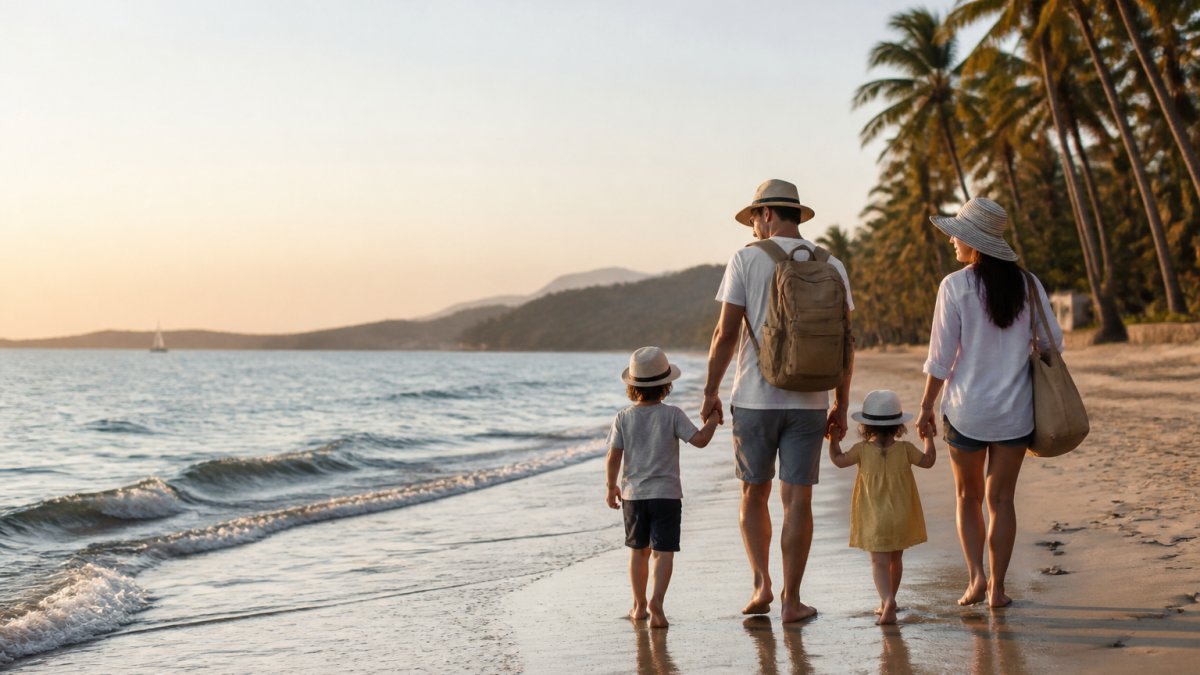
 how-to
Planning a Vacation With Small Children: 2026 Guide
Table of Contents
- Why Family Vacation Planning Starts With Your Child's Age
- How to Choose the Best Vacations for Toddlers
- Family Vacation Planning: A Practical Timeline
- Traveling With Toddlers: Managing Travel Days
- The Toddler Travel Checklist for Packing and Gear
- Keeping Routines, Naps, and Meals on Track
- Budgeting, Safety, and Realistic Downtime
- Frequently Asked Questions
Last Updated: October 19, 2026
Why Family Vacation Planning Starts With Your Child's Age
Planning a vacation with small children works best when you match the trip to your child's stage, not to a glossy brochure. A baby needs calm and shade. A toddler needs movement and short bursts of activity. A preschooler wants to help choose what happens next.
At The Curated Mile, we plan family trips around that simple idea: age first, destination second. Get the age question right and everything else gets easier.
Here is what most guides get wrong. They list "kid-friendly" resorts as if all small children were the same. They are not.
- Under 12 months: prioritize shade, quiet, and a base close to essentials
- 12 to 24 months: prioritize floor space, easy naps, and short travel legs
- 2 to 4 years: prioritize activities, outdoor time, and flexible schedules
- Mixed ages: prioritize a base that works for the youngest child first
The American Academy of Pediatrics guidance on traveling with children is a useful starting point for health questions before you book anything.
How to Choose the Best Vacations for Toddlers
The best vacations for toddlers are close, simple, and built around short outings. A beach town beats a five-city tour. A cabin near a lake beats a hotel in a busy downtown. But "close and simple" is only the starting filter.
Start with travel time, not with the destination's reputation. A common pattern among families who travel well with toddlers is a simple ratio: keep total door-to-door travel under about half a day each way. A two-hour flight or a four-hour drive leaves energy for actual fun.
What should you look for in a destination?
- A place you can reach without a full-day journey, ideally with a direct flight or a drive that fits inside one nap
- A base with a kitchen or kitchenette for easy meals and a familiar breakfast
- Nearby outdoor activities: beach, park, trails, or a pool within a short walk
- A short walk from the room to the main attractions, so you are not commuting every day
- Room for downtime, not a packed itinerary
- A base that works for the youngest child first when ages are mixed
Then match the destination archetype to your toddler's temperament. A beach town suits children who like open space and water but need shade and a short walk back to the room. A lake cabin suits early risers and children who do better with a fixed base and a yard.
Think of a combo trip: a few beach days plus one small town or nature stop. Toddlers handle variety better when it arrives in small doses, and a single change of base is usually enough.
Season deserves the same honesty. Off-season often means fewer crowds and calmer days, which suits small children well, but check the weather pattern for your month before you commit.
Family Vacation Planning: A Practical Timeline
Family vacation planning runs on a simple timeline: decide the season, book the base, plan the travel day, then fill the itinerary last. Most stress comes from doing those steps out of order.
Here is the sequence we use with families.
| When | Step | Why It Matters |
|---|---|---|
| 4 to 6 months out | Pick travel dates and season | School breaks and weather drive everything else |
| 4 to 5 months out | Choose destination and base | Accommodation is the hardest piece to fix later |
| 3 months out | Book flights or plan the road trip | Gives you time to adjust the travel day |
| 2 months out | Set the daily rhythm | Naps, meals, and downtime first |
| 1 month out | Build the packing list and gear list | Avoids last-minute gear panic |
| 1 week out | Confirm bookings and share the plan | Fewer surprises on arrival |
Travel dates deserve honest thought. Off-season often means fewer crowds and calmer days, which suits small children well. Seasonal travel also changes what you pack, so check the weather pattern for your month before you commit.
Traveling With Toddlers: Managing Travel Days
Traveling with toddlers goes better when you treat the travel day as its own event, not dead time before the trip. Plan it the way you plan a day at home: snacks, rest, movement, and a clear end point.
A few habits help on almost every travel day:
- Fly or drive during a normal awake window, not at the edge of nap time
- Pack snacks your child already eats at home
- Bring one familiar comfort item in the carry-on
- Build in a movement break every couple of hours on a road trip
- Keep the first evening after arrival light
For flights, check current rules directly with the airline and with the Transportation Security Administration before you pack, since screening rules for formula, breast milk, and strollers can change.
A common mistake is over-scheduling arrival day. Land, settle in, eat something simple, and let everyone reset. The trip starts properly the next morning.
The Toddler Travel Checklist for Packing and Gear
The toddler travel checklist should cover four things: sleep, food, hygiene, and entertainment. Everything else is optional. The trick is to pack for the trip you are actually taking, not the one in the brochure, and to treat safety gear as its own category rather than an afterthought.
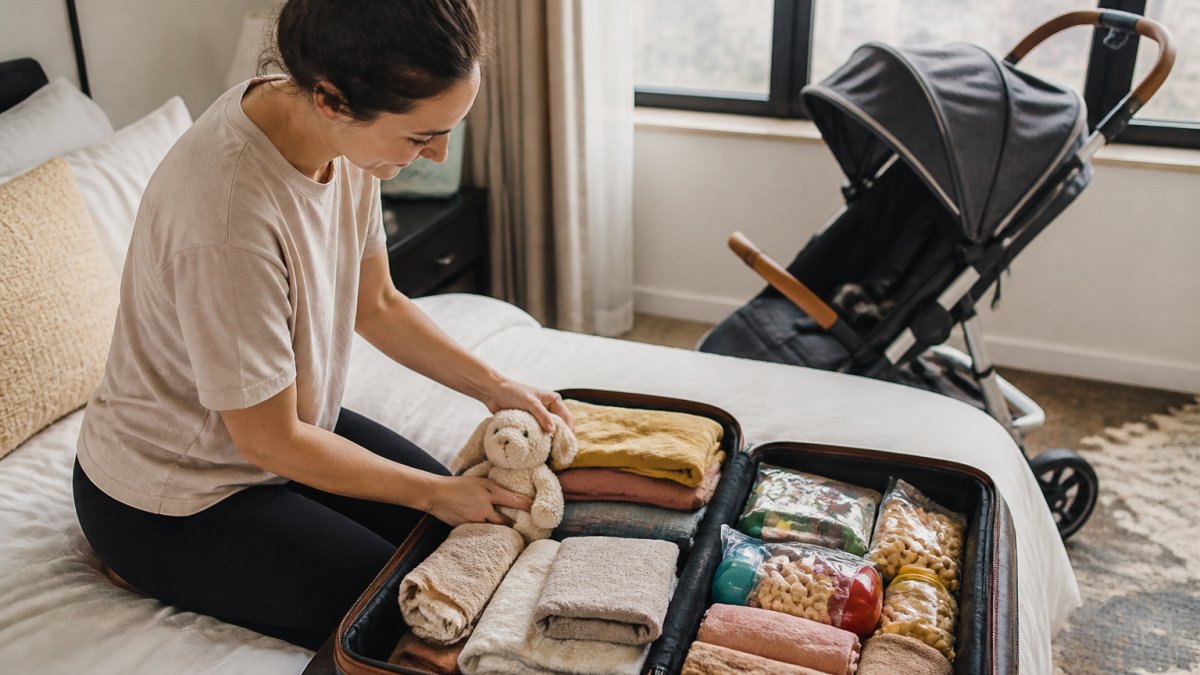
Pack light where you can. Basics like diapers, wipes, and snacks are easy to buy at your destination, which frees suitcase space for the gear that is hard to replace.
- Car seat, if you will ride in cars or taxis, and a plan for how it travels on the plane or in the trunk
- Stroller that folds small enough for your transport, plus a rain cover if the season calls for it
- Sleep sack or familiar bedding, and a portable white-noise source if your child uses one at home
- Two spare outfits per travel day, plus one extra layer for temperature swings
- Snacks your child already eats at home and a refillable water bottle
- Basic first-aid kit, any regular medication in its original packaging, and a thermometer
- Sun protection: hat, sunscreen, light layers, and sunglasses if your child tolerates them
- A few small toys and one comfort item, rotated so they feel new on the travel day
- Charged devices and a backup battery
- Copies of booking confirmations and a photo of your child's travel documents on your phone
Safety gear deserves its own short list because it is the category families most often improvise. Car seat rules vary by state, so check the National Highway Traffic Safety Administration guidance for where you are going and how you will travel once you arrive.
A few gear trade-offs are worth deciding before you leave. A full-size stroller is easier on your back and better for naps on the go, but a compact folding stroller is easier on planes, trains, and narrow sidewalks. A carrier is the better choice for a destination with stairs and cobblestones.
Keeping Routines, Naps, and Meals on Track
Routines are the quiet engine of a good family trip. Keep naps, bedtime, and meals roughly where they are at home, and most small children adjust faster than parents expect.
You do not need a perfect schedule. You need a recognizable one.
- Protect the main nap, even if it moves by an hour
- Keep bedtime rituals the same: same book, same order, same comfort item
- Eat meals at close to normal times, with one flexible meal allowed
- Plan downtime after big activities, not before
- Bring familiar breakfast foods for the first morning
Meal planning saves more tears than any toy. Book accommodation with a kitchen or kitchenette when you can, and keep one easy meal in the room for arrival night.
Budgeting, Safety, and Realistic Downtime
A travel budget for a family trip has more lines than most parents expect. Beyond transport and lodging, plan for gear, meals, activities, and a buffer for the unexpected.
We recommend building the budget in categories rather than one lump sum:
- Transport to and from your destination
- Accommodation, including any resort or parking fees
- Food, split between groceries and meals out
- Activities and tickets
- Gear you still need to buy or rent
- A contingency buffer for changes and surprises
Pricing for any trip depends on dates, destination, and group size, so treat any quote as a starting point and confirm current rates before you commit.
Safety deserves its own short list. Save local emergency numbers, know where the nearest clinic is, and keep medication in your carry-on. For health questions specific to your child, talk to your pediatrician before you travel.
Downtime is the piece families cut first and miss most. Build one slow block into every day. A quiet afternoon at the pool or a nap in a shaded room does more for the trip than one more attraction.
That is where a planner earns their keep. The Curated Mile builds family itineraries around your child's rhythm, from the base you sleep in to the pace of each day. You can see how our family travel planning works, and we also handle multi-generational trips when grandparents and cousins join in.
Frequently Asked Questions
What age is hardest to travel with kids?
Many parents find the toddler years, roughly 1 to 3, the most demanding because children are mobile, curious, and still dependent on naps and familiar routines. Babies are often easier to transport but need more gear, while preschoolers can handle longer days but tire quickly. The real difficulty depends less on age than on temperament and how well the trip matches your child's schedule, so build in slack for naps, meals, and downtime no matter the age.
How do you plan a vacation with a toddler?
Start with the child, not the destination. Pick a place with short travel legs, a kitchen or fridge for familiar food, and easy access to outdoor space. Book accommodations with a separate sleep area if possible, then map each day around one anchor activity and plenty of downtime. Use a toddler travel checklist so packing does not become a last-minute scramble, and keep the itinerary flexible enough to drop plans when a nap runs long or a meltdown hits.
How many activities should you plan each day with young children?
One main activity per day is a realistic target for most families with small children. A morning outing, a lunch back at the rental, and an afternoon nap or quiet hour leaves room for a low-key evening walk or pool dip. Stacking three or four attractions into a single day usually backfires: children get overstimulated, parents get frustrated, and nobody enjoys the thing you paid for. Build in a buffer day for every three or four active days.
What should you pack for a vacation with small children?
Focus on essentials you cannot easily buy on arrival: a familiar lovey or blanket, a few favorite snacks, a refillable water bottle, a small first-aid kit, and any prescription medicine. Bring one compact stroller or carrier rather than both, a car seat if you will ride in taxis or rentals, and a light bag of entertainment like stickers, a few books, and downloaded shows. Clothes can be washed or bought locally, so pack lighter than you think and leave room for souvenirs.
Planning a trip with small children asks a lot of you: the right base, a sane travel day, protected naps, and a budget with room to breathe. That is exactly the work we take off your plate at The Curated Mile. Our personalized travel planning, worldwide destination support, and experience with family and multi-generational journeys mean you can focus on the trip instead of the logistics. Get started with The Curated Mile and travel with a plan that fits your family.