 ultimate-guide
Planning High-End Executive Retreats: A 2026 Guide
Table of Contents
- Planning High-End Executive Retreats: Where Strategy Meets Setting
- Step 1: Define Objectives and Secure Stakeholder Buy-In
- Step 2: Budget Allocation, Logistics, and Travel Coordination
- Step 3: Selecting Luxury Corporate Retreat Venues
- Step 4: Building Your Executive Retreat Agenda Template
- How Long Should an Executive Retreat Be?
- Best Practices for Executive Offsites: Privacy, ROI, and Hybrid Integration
- Conclusion: Bringing It All Together
- Frequently Asked Questions
Last Updated: October 4, 2026
Planning High-End Executive Retreats: Where Strategy Meets Setting
Planning high-end executive retreats is the discipline of designing a small, senior-level offsite where every logistical detail serves a strategic purpose. Get it right and you leave with decisions made, not just a nice memory. At The Curated Mile, we plan travel around milestone moments.
The difference between a good offsite and a wasted one rarely comes down to the resort. It comes down to what you decided before you ever booked a room. Below, we walk through the five steps that separate a retreat that moves the business forward from one that quietly becomes a vacation with a whiteboard.
Step 1: Define Objectives and Secure Stakeholder Buy-In
Start with the decision you need made, not the destination you want to visit. A retreat built around "team alignment" in the abstract produces vague conversation. A retreat built around "approve the 2027 operating plan" produces a document.
Ask each attendee what they need to leave with, then write a one-page charter covering:
- The single primary objective, stated as an outcome
- Two or three secondary goals
- Who must attend, and who merely could
- What "done" looks like by the closing session
Circulate that charter for sign-off at least six weeks out. Executives who help write the agenda show up prepared instead of skeptical.
Step 2: Budget Allocation, Logistics, and Travel Coordination
Build the budget from the agenda backward, not the venue forward. Once you know how many working sessions you need, you know how many nights and how much meeting space to reserve.
A practical allocation splits roughly into four buckets: lodging, meeting space and facilitation, meals and activities, and travel. Travel coordination deserves its own line because it is where executive offsites quietly fall apart. Staggered arrivals, a delayed flight into a remote location, or a missing ground transfer all cost you a session.
Assign one person to own logistics, or hand the whole thing to a travel planner who does this for a living. U.S. Travel Association industry research consistently shows that business travel disruptions cascade through schedules, and a C-suite group has no slack in theirs.
Step 3: Selecting Luxury Corporate Retreat Venues
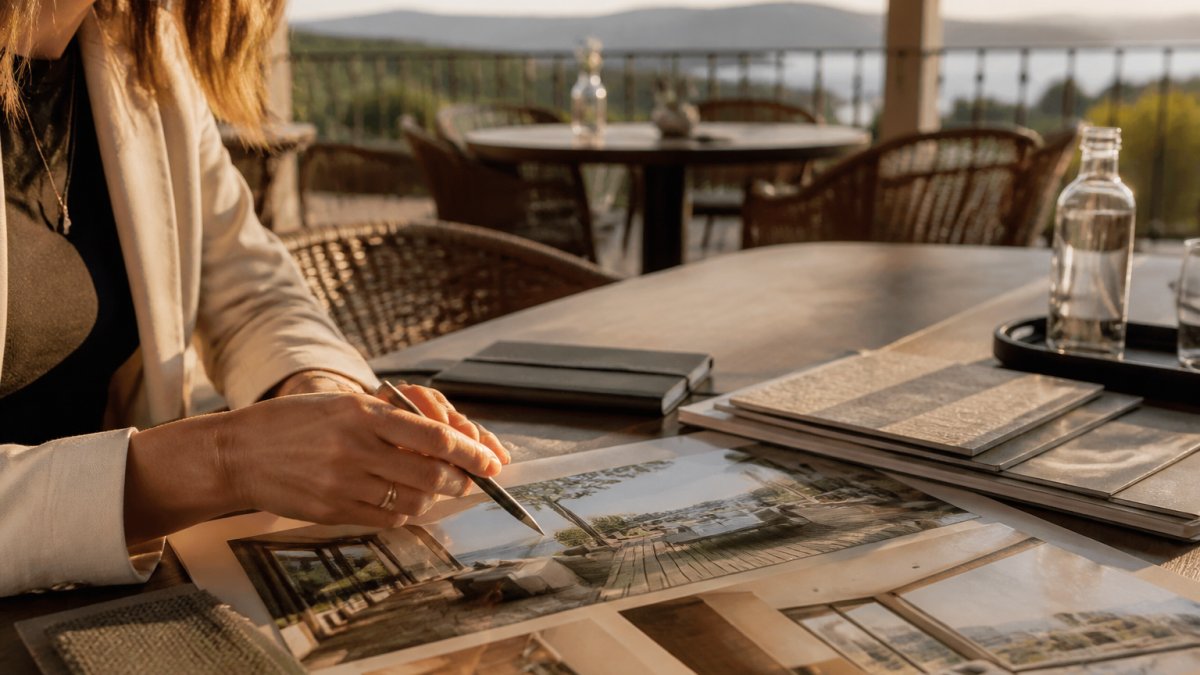
The best luxury corporate retreat venues are chosen for privacy, security, and proximity to an airport, not for how they photograph. A property that looks spectacular but sits two hours from the nearest commercial airport will cost you half a day in each direction, and a property that shares a lobby with leisure guests will cost you candor.
Screen candidates against six criteria, in this order:
- Exclusive use or a sealed private wing. Ask whether other bookings can overlap yours and whether the property will guarantee in writing that no other group shares your meeting floor, dining room, or grounds during sessions.
- Meeting rooms with natural light and redundant connectivity. Confirm a hardwired backup and a secondary internet provider, not just Wi-Fi. A dropped video call during a board-adjacent session is a credibility problem, not an inconvenience.
- Airport accessibility under 90 minutes by ground transfer. Under 60 minutes is better. Anything past 90 minutes should come with a private aviation or helicopter plan, or it should be cut.
- On-site dining that handles dietary requirements without drama. Ask for a sample menu and a named point of contact for allergies, not a promise that "the chef can accommodate."
- A discreet staffing model. Ask how staff access meeting floors, whether housekeeping is scheduled around sessions, and whether the property uses any recording devices in common areas.
- A confidentiality clause you can actually enforce. Most luxury properties will sign a mutual NDA. Ask before you tour, not after you book.
Boutique properties, private estates, and dedicated executive conference centers often beat large resorts here. They offer confidentiality by default, and the setting itself becomes part of the facilitation. A working farm, a historic estate, or a mountain lodge with a single dining room tends to produce different conversation than a 400-room flagship with a convention wing.
Step 4: Building Your Executive Retreat Agenda Template
An executive retreat agenda template is a timed document, not a list of topics. Every block gets a start time, an owner, and a stated output.
| Block | Duration | Owner | Output |
|---|---|---|---|
| Arrival and dinner | Evening 1 | Host | Informal reconnection |
| Strategic visioning | 3 hours | CEO | Draft priorities |
| Breakout sessions | 90 minutes | Department leads | Two proposals each |
| Working lunch | 60 minutes | Facilitator | Cross-team input |
| Decision session | 2 hours | CEO | Approved plan |
| Closing and commitments | 45 minutes | Facilitator | Written next steps |
Leave white space. The best conversations happen in the gaps, and an agenda packed to the minute kills them.
How Long Should an Executive Retreat Be?
An executive retreat should run two to three days for most leadership teams. One day is too short to reach real decisions once travel is factored in. Beyond three days, attention drops and calendars start pulling people away.
A two-night format works for teams that need alignment. Three nights suits strategic planning, board-adjacent sessions, or groups traveling from several time zones. Anything longer usually means the agenda is padded.
Best Practices for Executive Offsites: Privacy, ROI, and Hybrid Integration
Strong executive offsites share three traits: airtight confidentiality, a measurable return, and a plan for people joining remotely. Most guides stop at logistics. These three are where the real work lives.
Privacy and Security Protocols
Confidentiality at this level is a protocol, not a promise. Build it in four layers:
- Legal. Have every attendee and every on-site vendor sign a mutual NDA before materials are distributed. For sessions touching material nonpublic information, coordinate with counsel on timing and disclosure windows.
- Digital. Collect phones at the door for sensitive sessions, or require them to be silenced and stored. Ask the venue whether smart speakers, in-room assistants, or conference-room recording defaults can be disabled. Assume any connected device in the room is a microphone until proven otherwise.
- Physical. Confirm who has keys to the meeting wing, how documents are stored overnight, and whether a secure room is available for printing and shredding. Bring a lockable case for anything you would not leave in a hotel room.
- Transport. Use vetted ground transport with a single point of contact. Avoid rideshare for executives carrying sensitive materials, and stagger arrivals so the group does not announce itself in the lobby.
Measuring ROI and Business Impact
Define your KPIs before you travel, and tie them to the decisions the retreat is meant to produce. A workable framework tracks three layers:
- Outputs (day of): decisions made, owners assigned, deadlines set. Capture these in a written close-out document before anyone leaves the room.
- Outcomes (30 and 90 days): follow-through rate on assigned actions, progress against the priorities set, and whether the operating plan actually changed.
- Signals (qualitative): a short post-event survey of attendees, plus a 90-day pulse check on whether the group's decision velocity improved.
Harvard Business Review on measuring meeting effectiveness makes the case that unmeasured gatherings repeat their own mistakes. The same logic applies here: if you cannot name the decisions a retreat produced, the setting did not matter.
Hybrid and Remote Executive Integration
Distributed leadership teams are now the norm, and a screen propped in the corner of the room is not inclusion, it is an audience. Three practices separate working hybrid sessions from performative ones:
- Assign a dedicated remote facilitator. This person's only job is to watch the remote room, surface raised hands, and call on remote participants by name.
- Give remote participants equal airtime by design. Build the agenda so remote voices open at least one major discussion, not just react to it.
- Send materials in advance and use a shared working document. Remote attendees cannot read a whiteboard from a webcam. If the room is working on a wall, someone in the room should be transcribing into a shared doc in real time.
- Consider a shorter, more structured format. Hybrid sessions fatigue faster than in-person ones. Two focused hours beat four meandering ones.
Conclusion: Bringing It All Together
The hard part of planning high-end executive retreats is not finding a beautiful property. It is holding a room of senior people to a clear objective, then proving the trip earned its place on the calendar. That takes an agenda with teeth, logistics that never intrude, and a privacy standard everyone trusts.
This is where The Curated Mile does its best work. We build tailored travel experiences around milestone moments, and design the itinerary around your objectives rather than a template. The same care we bring to Multi-generational Travel, balancing very different schedules, needs, and priorities in one itinerary, is exactly what a leadership offsite demands. Start planning your next journey with The Curated Mile, and let the details take care of themselves.
Frequently Asked Questions
What are the key components of a high-end executive retreat?
A high-end executive retreat combines a clear strategic purpose, a private and inspiring venue, a thoughtfully designed agenda, and seamless logistics. Key components include defined objectives and KPIs, confidential setting, balanced programming with facilitation, wellness and team-building activities, and post-event follow-up. Unlike standard offsites, these retreats prioritize executive presence, strategic visioning, and discretion, often with concierge-level travel coordination and exclusive lodging.
How far in advance should you begin planning an executive retreat?
For high-end executive retreats, begin planning 6 to 12 months in advance. This allows time to secure luxury corporate retreat venues, coordinate complex travel logistics, align stakeholder schedules, and design a customized agenda. Last-minute planning often limits venue options and increases costs. Early planning also enables better negotiation and ensures privacy protocols are in place.
What is the typical budget allocation for luxury executive offsites?
Budget allocation varies widely based on group size, destination, and duration. Common categories include venue and lodging, travel and transportation, catering and dining, facilitation and speakers, activities, and contingency. For high-end retreats, a significant portion often goes to exclusive lodging and private dining. We recommend directing readers to consult with a travel advisor for a customized estimate rather than citing specific figures.
What are the best locations for high-end executive leadership retreats?
The best locations balance seclusion, accessibility, and amenities. Consider private estates, boutique resorts, or exclusive lodges within a few hours' flight of major hubs. Proximity to airports matters for executive schedules. Destinations with natural beauty and privacy, such as coastal or mountain settings, work well. Avoid crowded tourist areas. The ideal venue supports both focused work and relaxation, with reliable connectivity and confidentiality.